
Introduction
The world of content creation continues to evolve, with aspiring vloggers and filmmakers seeking quality yet budget-friendly options to elevate their projects. Among the myriad of cameras available on the market, the Sony ZV-E10 and Canon M50 stand out as two highly regarded models known for their commendable performance and user-friendly interfaces. These cameras have gained considerable popularity, particularly among content creators, due to their exceptional features tailored to vloggers. With the rise of platforms like YouTube and TikTok, making an informed decision between the Sony ZV-E10 and Canon M50 is paramount for anyone serious about investing in a reliable camera.

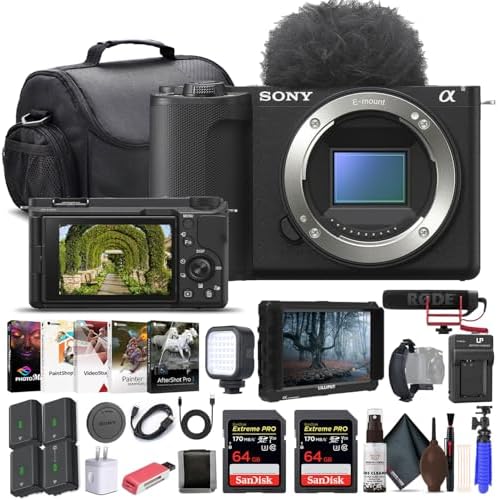
- Sony USA Authorized. ZV-E10 body (black) with 64GB Extreme PRO card, Corel creative suite, NPF-W50 battery with charger,…
- Compact Mirrorless Body for Creators – The Sony ZV-E10 is designed as a lightweight, portable camera body tailored for v…
- High-Resolution APS-C Sensor – Equipped with a 24.2 MP APS-C Exmor CMOS sensor, the ZV-E10 captures crisp photos and det…
- Pro Video Features in a Compact Form – The ZV-E10 records oversampled 4K video with 10-bit depth and advanced color opti…
- Creator-Friendly Connectivity and Streaming – Lightweight yet powerful, the ZV-E10 supports Wi-Fi and Bluetooth for seam…
The significance of selecting the right camera extends beyond mere specifications; it encompasses various factors including budget constraints, desired video quality, and ease of use. The Sony ZV-E10, designed specifically for vloggers, offers an array of features like a fully articulating screen, excellent autofocus capabilities, and significant audio enhancements, making it a compelling option for those aiming to capture high-quality content. On the other hand, the Canon M50, which has long been a favorite, boasts solid image quality, a wide selection of lenses, and an intuitive interface, appealing to beginners and seasoned users alike.

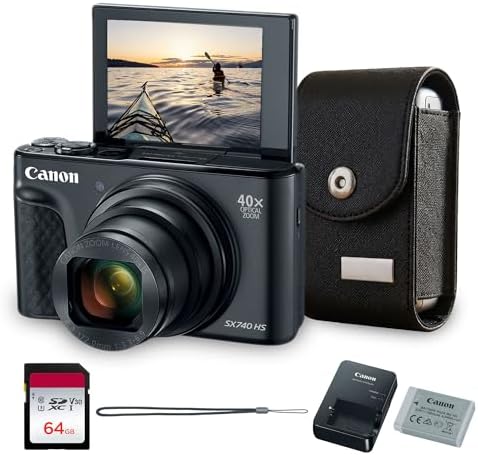
- Items Included: Canon EOS R100 Mirrorless Camera, LP-E17 Lithium-Ion Battery Pack, LC-E17 Charger Canon R-F-5 Camera Cov…
- Beginner-Friendly Mirrorless Power: The Canon EOS R100 offers an accessible entry into mirrorless photography with a 24….
- Versatile RF-S 18-45mm Lens Included: This kit comes with the Canon RF-S 18-45mm f/4.5-6.3 IS STM lens, perfect for gene…
- Dual Pixel CMOS Autofocus for Sharp Results: Canon’s reliable Dual Pixel CMOS AF ensures fast and accurate focusing, esp…
- Key Features: 24.2MP APS-C CMOS Sensor, DIGIC 8 Image Processor, 4K 24p Video with Crop, Full HD 60p, Dual Pixel CMOS AF…
In an era where visual storytelling plays a crucial role in audience engagement, understanding the key differences and strengths of the Sony ZV-E10 and Canon M50 becomes essential. An optimal camera choice not only enhances production value but also ensures that creators can deliver their message effectively without being hindered by technical limitations. As we proceed to compare these two cameras in detail, we will uncover the critical aspects that influence the buying decision for budget-conscious enthusiasts.
Budget Comparison
The pricing landscape for the Sony ZV-E10 and Canon M50 presents a crucial consideration for budget-conscious photographers and videographers. The Sony ZV-E10 enters the market with a price range typically starting from around $698, while the Canon M50 is positioned slightly lower, usually found starting at approximately $599. This initial price difference is important for consumers looking for value without sacrificing quality.


Both cameras come with their own set of features and limitations that appeal to different types of users. When assessing the overall value, potential buyers should consider the range of additional accessories often required. For instance, if one opts for the Sony ZV-E10, essential accessories might include external microphones, various lenses, and sturdy tripods. These can add approximately $100 to $300 or more to the overall investment. Similarly, the Canon M50 users might find themselves needing a good lens and audio equipment, with additional costs potentially matching or exceeding those for the ZV-E10.
A thoughtful assessment of the camera prices relative to features offered can help inform purchasing decisions. The ZV-E10, with its tailored functionality for vlogging and content creation, may justify its price for individuals focused on video projects. Conversely, the Canon M50’s broad versatility makes it suitable for both photography and videography, thus appealing to users looking for a multi-purpose camera.


Ultimately, potential buyers must weigh their specific needs against the costs associated with each camera. Evaluating budget constraints, along with necessary accessories and potential value for money, could significantly influence the decision. Given the differences in initial pricing and necessary accessories, understanding one’s budget will be critical in making the best choice between the Sony ZV-E10 and Canon M50.
Image and Video Quality
When evaluating the image and video quality of the Sony ZV-E10 and Canon M50, several critical factors must be considered, including resolution, color reproduction, low-light performance, and overall clarity in various scenarios.
The Sony ZV-E10 boasts a 24.2-megapixel APS-C sensor, providing impressive resolution for both still photos and videos. This model excels in color reproduction, capturing vibrant hues that remain true to life, which can be particularly beneficial for vlogging or outdoor photography. With the ability to shoot at 4K up to 30 fps and 1080p at a staggering 120 fps, the Sony ZV-E10 suits dynamic content creation well. Its advanced autofocus system ensures that subjects remain sharp and in focus, further enhancing clarity.
On the other hand, the Canon M50 features a 24.1-megapixel APS-C sensor that also delivers excellent image quality. While it supports 4K video, it is limited to 24 fps and has a crop factor that can restrict the field of view, making it less ideal for wide-angle shots. However, in 1080p mode, the M50 shines with Dual Pixel autofocus, delivering smooth focus transitions that are crucial for capturing moving subjects in vlogs or interviews.
In terms of low-light performance, the Sony ZV-E10 tends to outperform the Canon M50, producing clearer images with less noise at higher ISO levels. This advantage is particularly notable when shooting in dimly lit environments, such as events or indoor settings. Conversely, the M50 may struggle with noise in similar conditions, which could be a deciding factor for users who frequently work in low-light scenarios.
Overall, both cameras offer commendable image and video quality suitable for budget enthusiasts. The choice between the Sony ZV-E10 and Canon M50 should depend on specific use cases, such as the need for 4K capabilities, color fidelity, and low-light performance.
Key Features Overview
When comparing the Sony ZV-E10 and the Canon M50, understanding their key features is essential, particularly for those within the vlogging community. These two cameras have been specifically designed to meet the needs of content creators, and they each present unique advantages.
One of the standout features of the Sony ZV-E10 is its advanced autofocus capabilities. It is equipped with Fast Hybrid AF, which combines phase detection and contrast detection, resulting in quick and accurate focusing even on moving subjects. This is particularly advantageous for vloggers who require seamless transitions between various subjects in their videos. In comparison, the Canon M50 also boasts robust autofocus performance with Canon’s Dual Pixel AF technology; however, it may not perform as efficiently as its Sony counterpart in fast-paced scenarios.
Both cameras feature a vari-angle flip screen, enabling vloggers to easily frame their shots while recording. The Sony ZV-E10‘s 3-inch LCD touchscreen provides a bright and clear display that can be rotated 180 degrees, while the Canon M50’s similar screen design allows for flexibility in shooting angles, making both excellent choices for on-the-go vlogging.
Audio quality is another key consideration, and both cameras are equipped with microphone input ports. The Sony ZV-E10 comes with a directional microphone that reduces background noise, while the Canon M50 supports external microphones as well, giving users the option to further enhance audio quality.
In terms of battery life, the Sony ZV-E10 may outperform the Canon M50, allowing longer shooting sessions without frequent recharging. This is crucial for vloggers who often shoot extended footage. Lastly, regarding connectivity, both cameras offer Wi-Fi and Bluetooth, making it easy to transfer content quickly to smartphones or computers, an increasingly vital feature for content creators looking to share their work promptly.
Ease of Use and User Experience
The user-friendliness of a camera can significantly impact the overall experience for both beginners and seasoned photographers. In comparing the Sony ZV-E10 and the Canon M50, we can find that each offers distinct advantages in terms of ease of use and user experience.
The Sony ZV-E10 is designed with vloggers and content creators in mind. Its intuitive layout makes it straightforward for new users to navigate its features. The camera boasts a fully articulating touchscreen, which enhances usability, particularly for video recording. Users can easily access various modes and settings through a streamlined menu structure. The arrangement of buttons is also well thought out, allowing for quick adjustments to essential settings. This design caters to those who value efficiency, especially when engaging in dynamic shooting scenarios.
On the other hand, the Canon M50 is well-known for its ease of navigation, making it a popular choice among beginners. The camera’s menu is organized logically, with clear headings that simplify the search for specific features. Additionally, the implementation of a responsive touchscreen further augments its friendly approach, enabling users to change settings with a mere tap. The button layout on the Canon M50 is also designed for comfort, making it easy to understand where critical functions are located without significant trial and error.
Ultimately, both the Sony ZV-E10 and Canon M50 present user experiences tailored to their audience. While the ZV-E10 shines in its versatility for video creators, the Canon M50’s straightforward approach appeals to those looking for a simple yet effective still photography solution. The learning curve for both cameras is relatively gentle, ensuring that whether you are a beginner or an experienced photographer, you can strive to achieve your creative vision with either option.
Customer Reviews and Testimonials
Customer reviews provide insightful perspectives on the Sony ZV-E10 and Canon M50, highlighting both their strengths and weaknesses. Many users appreciate the Sony ZV-E10 for its user-friendly interface and exceptional video quality, particularly praising the camera’s autofocus system. One user noted, “The autofocus on the ZV-E10 is lightning fast, making it perfect for vlogging and dynamic shots.” This sentiment is echoed across various reviews, where the camera’s ability to maintain focus during movement is frequently lauded.
Moreover, the ZV-E10 is often noted for its compact design and versatility, making it an excellent choice for budget-conscious users seeking a balance between performance and portability. However, some reviewers have expressed concerns over battery life, labeling it as one of its few drawbacks. A reviewer mentioned, “While the video quality is superb, I wish the battery lasted longer during extended shoots.”
In comparison, customers who favor the Canon M50 highlight the color science and overall image quality, particularly for still photography. One satisfied user remarked, “The colors straight out of the camera are vibrant and very pleasing, making post-processing a breeze.” Additionally, the Canon M50’s vari-angle touchscreen is appreciated by vloggers and content creators, offering flexibility in framing shots. Nonetheless, some users have pointed out limitations in 4K video shooting, as the crop factor can be an issue for those looking to capture wide-angle scenes.
While both cameras have their proponents, it is clear that the Sony ZV-E10 is generally favored by vloggers due to its video-centric features, while the Canon M50 appeals more to those interested in photography and still image quality. Customer testimonials offer critical insights for prospective buyers, ultimately assisting them in making an informed choice.
Comparison of Portability and Design
When evaluating the Sony ZV-E10 and the Canon M50, portability and design emerge as significant factors, especially for budget-conscious enthusiasts who require a capable camera for various settings. Both cameras are relatively compact, which is ideal for users who plan to carry them around for travel, vlogging, or day-to-day photography.
The Sony ZV-E10 weighs approximately 343 grams (including battery and memory card), making it slightly lighter than the Canon M50, which has a body weight of around 387 grams. This difference in weight may seem minimal but can significantly affect comfort and usability when carrying the camera for extended periods. Additionally, the ZV-E10’s dimensions of 115.2 x 64.2 x 132.6 mm contribute to a more ergonomic handling experience, suitable for prolonged periods of use.
Aesthetically, the Sony ZV-E10 carries a modern design with a clear focus on vlogging capabilities, including a vari-angle LCD screen and a microphone input located prominently on the top, which enhances its usability for video creators. In contrast, the Canon M50 offers a more traditional DSLR-like appearance, highlighted by its rounded shape, which provides a classic feel and build quality that many users appreciate.
Both cameras feature a plastic build, but the Canon M50 demonstrates a somewhat sturdier feel thanks to its solid design. Nevertheless, the Sony ZV-E10 counters this with a sleek design that appeals to the modern user and provides flexibility in various shooting scenarios.
In different environments, choosing between the Sony ZV-E10 and Canon M50 comes down to personal preference concerning weight, design, and usability. While the Sony ZV-E10 boasts lightweight portability, the Canon M50 delivers a more traditional build. Ultimately, each model presents unique features suitable for different types of photography and videography enthusiasts.
Best Use Cases for Each Camera
The choice between the Sony ZV-E10 and Canon M50 can significantly impact the efficiency and quality of your content creation process. Each camera has particular strengths that cater to diverse needs within the realm of photography, videography, and streaming.
The Sony ZV-E10 is an excellent choice for vlogging and live streaming. Its user-friendly interface, compact design, and lightweight body make it particularly suited for content creators who value portability. Notably, the ZV-E10 comes equipped with a fully articulating touchscreen that enhances usability for self-recording, particularly useful for vloggers who may need to position the camera at various angles. Additionally, it offers advanced audio features, such as a built-in microphone windscreen, which ensures clear sound quality while filming outdoors. The camera’s superior autofocus system, including real-time Eye AF, further adds to its appeal for capturing spontaneous moments, ensuring that subjects are sharp and in focus.
On the other hand, the Canon M50 shines in traditional photography scenarios and all-purpose videography. With its robust image quality, users can expect high-resolution photographs that maintain detail across various lighting conditions. This camera is ideal for adventures such as travel photography, where dynamic scenes often arise. The M50 also excels in producing cinematic-quality videos, making it suitable for short films and YouTube videos. Moreover, Canon’s user-friendly interface makes it accessible for beginners, while still offering advanced features that appeal to experienced photographers.
In summary, when selecting between the Sony ZV-E10 and the Canon M50, consider your primary content creation needs. The ZV-E10 is excellent for vloggers and live streaming, whereas the M50 is well-suited for versatile photography and video projects. Understanding each camera’s strengths allows creators to leverage their capabilities effectively for various scenarios.
Conclusion and Final Recommendations
After a thorough comparison of the Sony ZV-E10 and the Canon M50, it is clear that both cameras hold their own distinct advantages, catering to different user needs and preferences. The Sony ZV-E10 is tailored specifically for content creators seeking to produce high-quality video. Its features, such as exceptional autofocus capabilities, a versatile interchangeable lens system, and advanced video recording options, make it a strong contender in the budget-friendly segment. This camera is particularly appealing to vloggers and streamers who prioritize video performance without significantly exceeding their budget.
Conversely, the Canon M50 remains a formidable choice for hybrid photographers and videographers. Its well-rounded capabilities allow users to effortlessly switch between still photography and video shooting. With its user-friendly interface and solid image quality, the Canon M50 appeals to beginner and intermediate users who may prioritize stills while still wanting the option to capture decent video content. Additionally, the camera’s color science produces pleasing skin tones which are a notable advantage for portrait photography.
In light of these findings, potential buyers should assess their primary focus—be it video or still photography—before making a decision. If video content is your main goal, the Sony ZV-E10 is likely the superior option due to its specialized features. However, for those who equally value both functions or who are primarily interested in photography, the Canon M50 could be more advantageous.
Ultimately, each camera has its strengths, and budget enthusiasts must weigh their individual needs against the specifications and features each model offers. Investing time in hands-on experience with both options when possible may further assist in making an informed decision.
